
Is Your Child Ready for Kindergarten? A Simple Checklist for Parents
Kindergarten is a big step. One day your child is happily building blocks in preschool, and the next you are filling out forms for "big kid" school. It is normal to feel a mix of pride and worry. Many parents ask us the same thing: how do I know if my child is really ready?
The good news is that kindergarten readiness is not about knowing every letter or counting to 100. It is about a mix of small skills that help a child feel calm, curious, and confident in a classroom. This guide explains what those skills are, how you can support them at home, and how the right school can make the transition easier.
What Kindergarten Readiness Really Means
Many parents think readiness means academics. In truth, teachers care just as much about how a child handles the day. Can they follow a simple routine? Can they ask for help? Can they finish a task even when it feels a little hard?
Readiness usually falls into four areas:
Social skills: taking turns, sharing space, and playing with other children
Emotional skills: managing big feelings, separating from parents, and trying again after a mistake
Thinking skills: curiosity, early counting, recognizing some letters, and listening to stories
Self-care skills: using the bathroom, putting on a jacket, and caring for their own belongings
A child does not need to be perfect in every area. Most five year olds are still growing in a few of them, and that is completely fine.
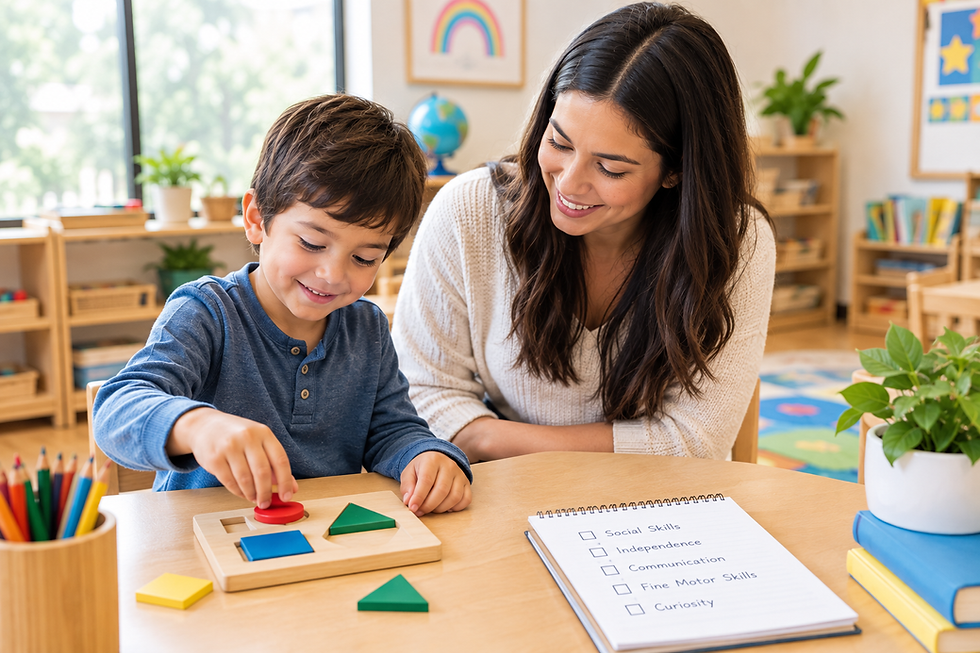
Signs Your Child May Be Ready
Here are a few signs we often see in children who are ready to move up:
They can follow two or three step directions, like "hang up your bag and sit on the rug"
They can focus on an activity for ten to fifteen minutes
They show interest in books, letters, or numbers
They can say what they need with words instead of tears
They are excited about being around other kids
If your child shows most of these, they are likely on track. If a few are still missing, a little more time and practice can help a lot.
Easy Ways to Prepare at Home
You do not need flashcards or expensive kits. Everyday moments do most of the work.
Read together every day. Even ten minutes helps. Ask simple questions like "What do you think happens next?" This builds listening and thinking skills.
Let them do things themselves. Let your child pour their own water, zip their own coat, and pack their own snack. These small jobs build the independence that kindergarten asks for.
Count in daily life. Count steps on the stairs, apples in the bowl, or cars in the parking lot. Numbers feel more real when they are part of the day.
Practice short separations. If your child gets nervous when you leave, start with short visits to a friend or relative. Slowly build up the time.
Keep a steady routine. Regular sleep, meals, and morning habits help children feel safe and ready to learn.
How the Early Years Shape Kindergarten Success
The years before kindergarten matter more than most people realize. A strong pre-k program San Diego parents can trust gives children time to build these skills in a calm, hands-on setting. Instead of rushing through worksheets, children practice real life tasks, learn to focus, and grow confident at their own speed.
At MBMA, children ages three to five spend their days in Children's House, our preschool and pre-k classroom. They work with hands-on materials for early reading and math, and they learn to care for their space and their classmates. By the time they reach age five, many children are ready for longer periods of focused work, which is exactly what kindergarten expects.
Starting Early Makes the Jump Smoother
Some children do best when they start even earlier. A good toddler program San Diego families choose can introduce routines, gentle independence, and a love of learning long before kindergarten begins. Our La Casita program welcomes children ages two to three, including little ones who are still working on potty training.
Children who grow up in the same school community tend to feel more secure. They know the teachers, they know the building, and they know what to expect. That comfort often shows up later as confidence in the classroom.
What to Look for in an Elementary School
Once your child is ready, the next step is choosing where they will spend their elementary years. When you tour a private elementary school San Diego has to offer, here are a few things worth checking:
Class environment: Does the room feel calm and welcoming? Are children engaged?
Teaching style: Do teachers guide each child, or teach one lesson to everyone at once?
Academic balance: Is there a clear plan for reading, math, and writing?
Support for transitions: How does the school help new students settle in?
Room to grow: Does the school offer a path through the upper grades?
Our elementary program enrolls students from Kindergarten through 6th grade. It blends the hands-on Montessori approach with traditional elements like testing, textbooks, and homework, so students are prepared for middle school and beyond. New students are welcome to join directly. We ask for a current progress report and a short skills evaluation with one of our teachers, which helps us understand where your child is and how to support them from day one.
When to Ask for Help
Every child grows at a different pace. If your child seems very anxious about school, has trouble with speech, or struggles to follow simple directions, it is worth talking to your pediatrician or a teacher you trust. Early support can make a real difference. A good school will always welcome your questions and work with you as a partner.
Come See a Classroom for Yourself
Reading a checklist can only tell you so much. The best way to know whether your child is ready, and whether a school feels right, is to visit in person. Watch how the children work. Notice how the teachers speak to them. Picture your own child in that room.
You can call our team at (858) 457-5895 or visit us at 2640 Soderblom Avenue, San Diego, CA 92122. We are happy to answer questions about tuition, hours, or enrollment for both our preschool and elementary programs.
Schedule a tour with MBMA today and take the first step toward a smooth, confident start to kindergarten.
Frequently Asked Questions
1. What age should my child start kindergarten?
Most children start kindergarten at age five. Readiness depends on more than age, so look at your child's social, emotional, and self-care skills too.
2. Does my child need to read before kindergarten?
No. Knowing a few letters and enjoying books is enough. Kindergarten teachers build reading skills from there.
3. What if my child is not potty trained yet?
It is very common for toddlers to still be learning. Our La Casita toddler program supports children ages two to three who are still working on it. Toilet training is needed before joining Children's House.
4. Can my child join your elementary program without attending your preschool?
Yes. New students are welcome to join directly. We ask for a current progress report and a short skills evaluation with one of our teachers.
5. How do I book a tour?
Call us at (858) 457-5895 or use our website to schedule a visit. Tours are the best way to see our classrooms and ask questions in person.


Comments