
Why Can’t My Child Sit Still or Stay Focused? How Preschool Helps Build Attention Skills
Does your child start one activity, lose interest a few minutes later, and immediately move on to something else? Do they struggle to finish puzzles, listen to a story, or follow simple instructions without getting distracted?
If this sounds familiar, you may be wondering whether your child has trouble concentrating or simply needs more time to develop their attention skills. These questions are common among parents of toddlers and preschoolers, especially when children are preparing for a more structured learning environment.
The good news is that concentration develops gradually. Young children are naturally curious, energetic, and eager to explore their surroundings. They are still learning how to manage distractions, follow instructions, and remain engaged with a task.
The right learning environment can help them practice these skills through everyday experiences. For families exploring preschool in San Diego, understanding how children develop attention can make it easier to choose a program that supports their individual needs.
Why Do Young Children Get Distracted So Easily?
Children are not born knowing how to concentrate for long periods. Attention develops with age, experience, and opportunities to practice. A toddler may move quickly between activities, while an older preschooler may gradually become comfortable working on a task for longer.
Several factors can influence a child's ability to focus.
Their activity may be too easy or too difficult. Children are more likely to lose interest when an activity does not match their current abilities. They may also become frustrated if they cannot understand what they are expected to do.
They need movement and exploration. Young children learn by touching, moving, observing, and experimenting. Expecting them to remain seated for extended periods may not suit their developmental stage.
They are still learning to manage emotions. Hunger, tiredness, excitement, or frustration can affect concentration. A child who struggles to settle down may need rest, reassurance, or a change of activity.
Their surroundings may be distracting. Loud noises, too many toys, television, and frequent interruptions can make it harder for children to focus on one thing.
Understanding the reason behind your child's behavior is more helpful than simply asking them to pay attention. It allows you to respond with patience and choose activities that encourage gradual progress.
How Does Montessori Learning Help Children Develop Concentration?
The Montessori method gives children opportunities to learn through hands on activities, purposeful exploration, and repetition. Rather than expecting every child to learn at the same pace, teachers observe individual interests and abilities and offer appropriate guidance.
At Mission Bay Montessori Academy, the learning environment encourages children to explore materials, develop independence, and build skills at their own pace. Small, mixed age classes also support cooperation and communication.
This approach can provide valuable opportunities to practice attention in a natural way.
For example, a child might choose a puzzle, work with counting materials, arrange objects, or complete a practical activity. As the child becomes familiar with the task, they can repeat it and gradually develop greater control over their movements and attention.
Teachers provide support when necessary while giving children space to work through challenges. The goal is not to force a child to sit still. It is to help them become genuinely interested in what they are doing.
Families looking for a Montessori preschool in San Diego may find this approach worth exploring, particularly if they want an environment that values both academic development and practical learning.
Five Ways Preschool Can Strengthen Attention Skills
1. Hands On Activities Make Learning Meaningful
Children often engage more readily when they can actively participate instead of only listening.
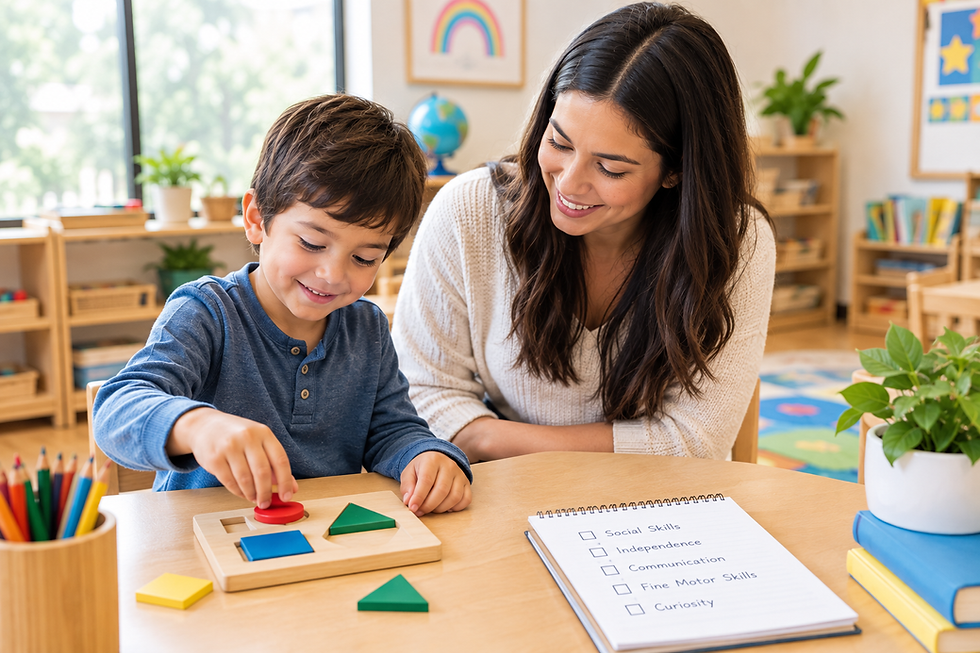
Sorting objects by color, matching shapes, building structures, and working with age appropriate learning materials give children something specific to explore. These activities encourage them to observe details, make decisions, and complete manageable tasks.
At a quality early childhood education program, activities are designed to suit children's developmental stages while offering opportunities to learn new skills.
The important part is to begin with achievable tasks. As children become more confident, they can gradually take on activities that require additional concentration.
2. Repetition Builds Confidence
Adults may find repeating the same activity unnecessary, but young children often enjoy practicing something they are beginning to understand.
A child may complete the same puzzle several times, repeat a sorting activity, or practice arranging objects in a particular order. Each attempt helps them become more familiar with the process.
Repetition also gives children an opportunity to notice mistakes and correct them independently.
Over time, these experiences can support concentration in preschool children, patience, and confidence in their own abilities.
3. Predictable Routines Help Children Feel Secure
Children often find it easier to focus when they understand what happens next.
A consistent routine helps them move between activities with fewer surprises. Knowing when it is time to work, eat, play, tidy up, or rest can make the day feel more manageable.
Preschool routines also give children regular opportunities to practice listening, following instructions, and completing everyday responsibilities.
Parents can use the same idea at home. A predictable bedtime routine, a regular reading period, or a few minutes of quiet play can help children become familiar with settling into an activity.
4. Independent Work Encourages Longer Engagement
When children are allowed to choose suitable activities and work through them with guidance, they have a reason to remain involved.
For example, a child who chooses a building activity may become interested in creating a particular structure. If the activity is interrupted repeatedly, they may lose track of what they were trying to accomplish.
A supportive Montessori classroom encourages children to develop independent learning skills while teachers provide direction when needed.
Children still learn in groups, interact with classmates, and receive instruction. The balance between independent work and social learning helps them practice different ways of paying attention.
5. Social Activities Teach Listening and Self Regulation
Concentration is not limited to completing academic tasks. Children also need to pay attention when someone speaks, wait for their turn, and participate in group activities.
Storytime, cooperative games, music, art, and classroom discussions offer opportunities to practice these skills.
During these experiences, children learn to listen to others, follow simple directions, and manage the excitement of participating with friends.
These are important parts of social and emotional development and can help children feel more comfortable in a classroom setting.
What Can Parents Do at Home to Improve Focus?
You do not need worksheets or lengthy lessons to help your child practice concentration. Everyday activities can be just as useful.
Start with short activities. Choose a puzzle, book, drawing activity, or building game that suits your child's age. Gradually increase the time as their interest develops.
Reduce unnecessary distractions. Turn off the television during play and keep only a few toys available at a time.
Let your child finish when possible. If they are engaged in an appropriate activity, avoid interrupting them unnecessarily. Allowing time to complete a task can encourage persistence.
Give clear, simple instructions. Instead of giving several directions at once, explain one step and allow your child to respond before introducing the next.
Include movement breaks. Outdoor play, dancing, walking, and active games help children use their energy. Focused activities and movement can complement each other.
Praise effort rather than perfection. Recognize when your child tries again, listens carefully, or works through a challenge. Encouragement helps them understand that concentration is a skill they can practice.
Remember that every child develops differently. If attention difficulties are persistent, occur across different settings, or significantly affect daily life, consider discussing your concerns with your child's pediatrician.
Choosing a Preschool in San Diego That Supports Your Child
When comparing preschools in San Diego, look beyond worksheets and academic milestones. Consider how the school helps children develop curiosity, independence, communication, and the ability to engage with activities.
During a school visit, observe whether children have access to age appropriate materials, whether teachers respond patiently to questions, and whether the classroom provides a balance of guided instruction and independent exploration.
Ask how teachers support a child who becomes frustrated, loses interest, or needs additional guidance. Their answers can help you understand whether the learning environment matches your child's needs.
Mission Bay Montessori Academy has served San Diego families since 1968. Its programs include La Casita for children ages two to three, Children's House for preschool and Pre K, and elementary education through sixth grade. Enrichment opportunities include science, music, fine art, technology, Spanish, Chinese, and physical education.
The school's Montessori approach emphasizes individualized learning, independence, responsibility, and cooperation. You can explore the programs at Mission Bay Montessori Academy to learn more about the learning options available.
Frequently Asked Questions
1. Is it normal for preschool children to have a short attention span?
Yes. Young children are still developing the ability to manage attention and distractions. Their focus varies according to age, interest, tiredness, and the type of activity. Short periods of engagement can be developmentally appropriate.
2. How can I tell if my child is ready for preschool?
Readiness involves more than knowing letters or numbers. Consider whether your child is beginning to communicate needs, explore activities, interact with others, and manage some daily routines. Readiness varies from child to child, so discuss your concerns with the school before making a decision.
3. Does Montessori education help with concentration?
Montessori learning provides opportunities for children to practice concentration through hands on activities, repetition, independent work, and individualized guidance. These experiences can help children develop attention skills over time, although progress differs for each child.
4. What activities help children improve focus at home?
Puzzles, picture books, building blocks, sorting games, drawing, simple cooking tasks with adult supervision, and matching games can encourage attention. Choose activities that suit your child's abilities and allow breaks when needed.
5. When should I be concerned about my child's attention?
Consider speaking with your pediatrician if your child consistently struggles to engage in everyday activities, has difficulty following age appropriate directions across settings, or experiences challenges that affect learning, relationships, or daily routines. A professional can help determine whether additional support may be useful.
Help Your Child Discover the Joy of Learning
A child who moves quickly from one activity to another does not necessarily have a problem. They may simply need more time, suitable activities, and patient guidance to develop their attention skills.
Small opportunities to explore, repeat, solve problems, and complete tasks can help children become more comfortable with focused learning. With support from families and educators, these everyday experiences can build a strong foundation for future learning.
If you are searching for a preschool in San Diego, CA that values curiosity, independence, and individual growth, consider learning more about Mission Bay Montessori Academy.
Visit the official MBMA website to explore its programs and schedule a tour. Finding the right learning environment can help your child feel supported as they discover new interests, develop confidence, and take their next steps toward school readiness.
School location: 2640 Soderblom Avenue, San Diego, CA 92122Phone: (858) 457 5895Website: https://www.mbmacademy.com/


Comments